Thrapsano is a town and the seat of the homonymous community of the Municipality of Minoa Pediados in the Heraklion Regional Unit of Crete. It belonged to the province of Pediados. Its location is about 30 kilometers southeast of Heraklion. Thrapsano is the metropolitan center of pottery in Crete and one of the two or three in all of Greece. Most of the residents are potters, a hereditary profession, taught by parents to their children. In addition to pottery, the people of Thrapsano are also engaged in agriculture (vineyards, olive trees) and less in livestock farming.
Historical information
According to one version, the name of the village came from the thrapsala, the shards of broken pottery that abound around the kilns. Moreover, the name it had during the Ottoman period was Tzomlektzi Kioi (=village of potters), with 206 kharatsa.
The Thrapsanoite is identified with the potter, as attested by the couplet, which was sung in the past by the girls who carried water over long distances: Diale ts’ aphothemenou tu, to paliothrapsanoite who makes the pitchers heavy and consumes youth.
The oldest written reference to the village is in documents of the Ducal Archive of Chandakas, Trapsiano and Thrapsiano in 1379.
In the Venetian census of the Kastrophylakas, Thrapsano is mentioned as Trapsano, with 468 residents.
In the 1881 census it is mentioned by its current name and at that time it was part of the municipality of Kasteli. It had 854 Christian residents. Later it was also written in the masculine: Thrapsanos (in 1920), as well as in the simple genitive (Thrapsanos).
Pottery Art
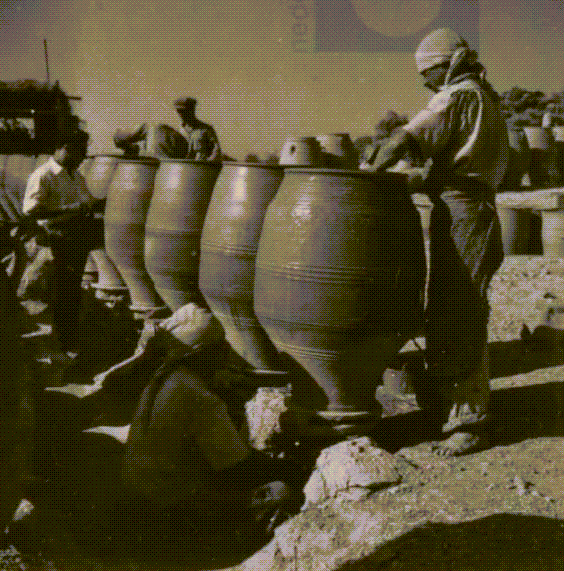
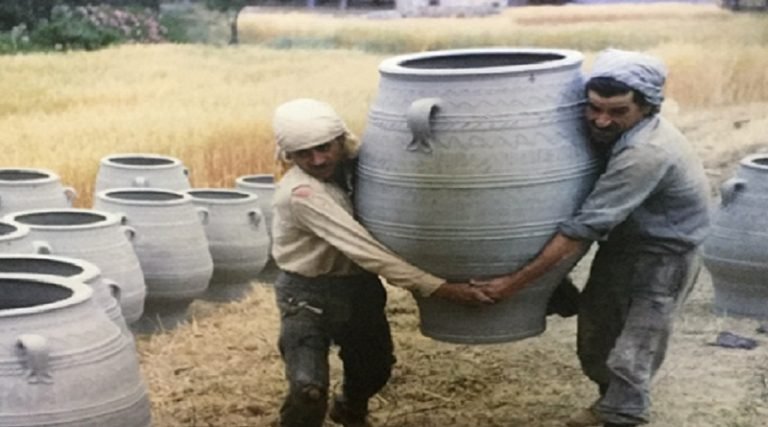
The pottery art of Thrapsanos is one of the most famous traditions of Crete, with a history that is lost in the centuries.
Our village has been famous since ancient times for its craftsmen, the Thrapsano potters. The inhabitants were traditionally engaged in the construction of large clay jars (also known as “Thrapsano jars”), which were used in the past to store oil, wine, grain or even water.
Elements of the art
Materials: Local red or yellow clay is used, properly processed.
Technique: The old craftsmen worked “by hand” and with the wheel, building the vessel gradually from the bottom up.
Drying & Firing: The jars were left to dry naturally and fired in wood-fired ovens (kilns) at very high temperatures.
Patterns: Many decorative elements are inspired by Minoan art, which had a strong presence in Crete.
Cultural significance
The pottery of Thrapsano is not just a production technique, but part of the local identity. Several scholars have recorded and analyzed the “Thrapsano Ventema”, that is, the craftsmen left each spring to work in various parts of Crete, setting up temporary workshops near areas with suitable clay and water.
Today, several workshops continue this tradition, combining the old art with more modern aesthetics and have the pottery available throughout Greece and in many countries abroad.
Attractions and Infrastructure
The main attractions that the visitor can visit are:
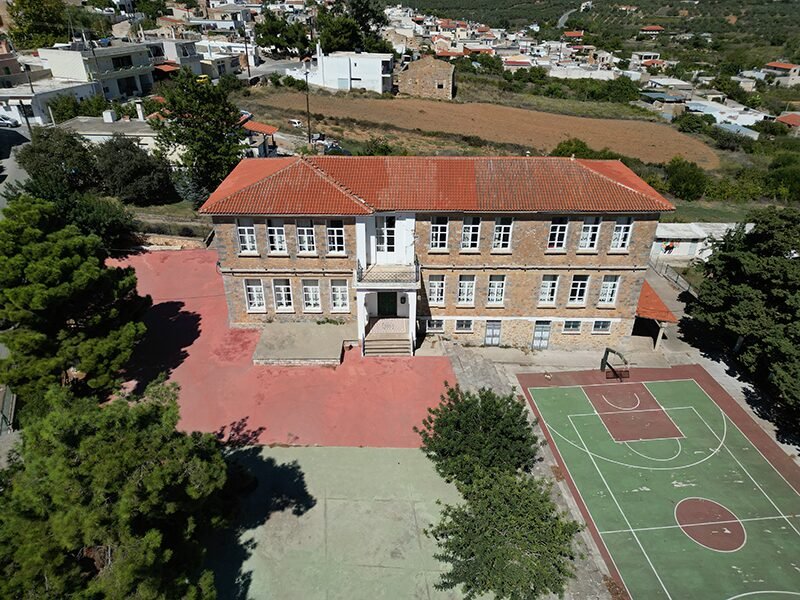
- The Primary School, founded in 1870, is one of the oldest schools in the prefecture of Heraklion. Since 1930, the building where it is housed has been considered a jewel, since it maintains its characteristics to this day, without any interventions that have affected it. It was handed over to the students on April 3, 1930. The school was built with great effort. Funds were provided by the state, the Community of Thrapsano, the Church, residents of the area and other private individuals, even from abroad.
- Churches.
There are a total of 13 churches, of which seven are chapels, the most important of which are those of the Exaltation of the Holy Cross, the Metamorphosis of the Savior and the Assumption of the Virgin Mary. - Limni Livades
- Pottery Workshops
- Central Square
Infrastructure
In addition to the Primary School, there is a single-seater kindergarten and a High School, a regional clinic, municipal services and a KEP.
Sports
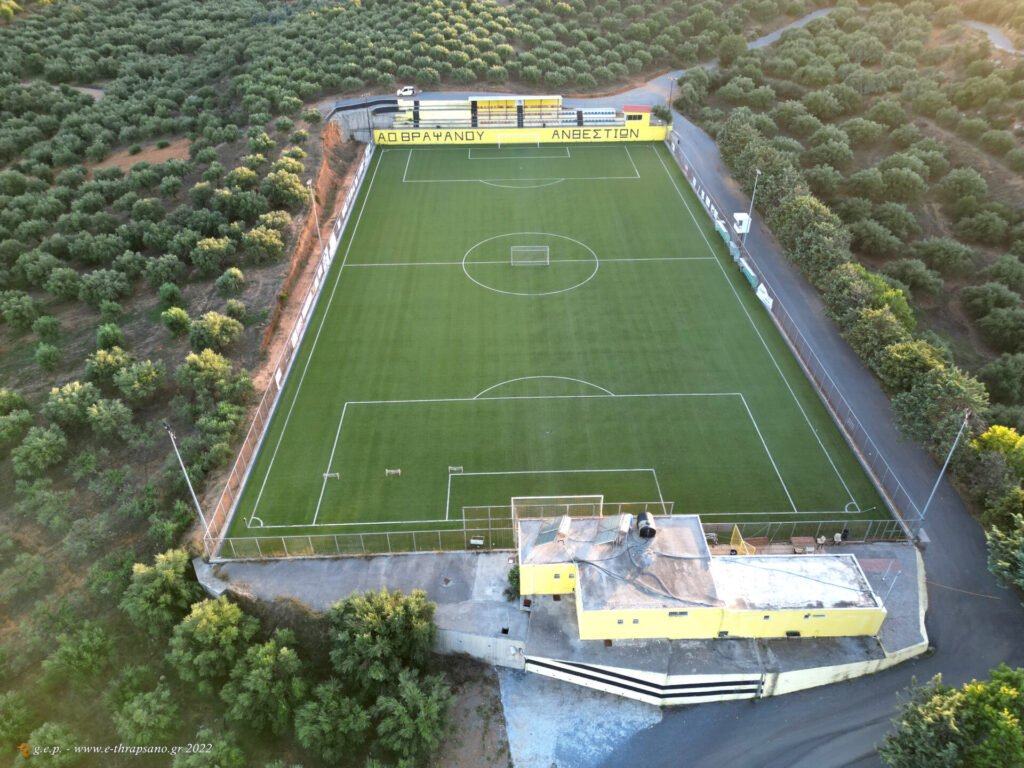
Its home ground is the village’s football stadium, the Thrapsano Municipal Stadium.
Center of Minoan Pottery in Thrapsano
The Center was created to highlight the centuries-old pottery tradition of Thrapsano, which dates back to the Minoan period. Its goal is to preserve the knowledge and techniques that have been passed down from generation to generation, but also to serve as a meeting point for creators, researchers and visitors from all over the world.
On Saturday, February 1, the School of Ceramic Art was inaugurated at the Minoan Pottery Center in Thrapsano.